


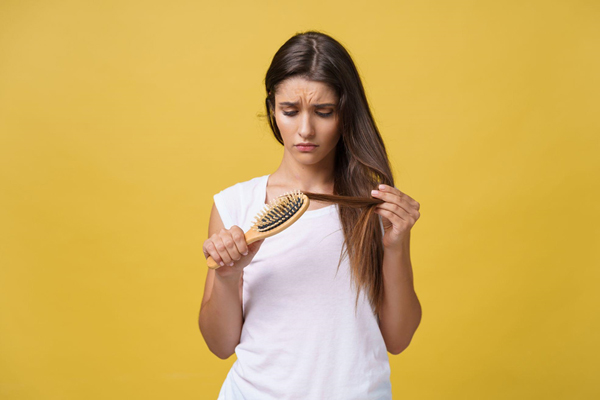
Most people blame shampoo, stress, or genetics when they
notice hair fall. But there's one everyday culprit that rarely gets mentioned —
the water coming out of your tap. If you've moved to a new city and suddenly
noticed more hair on your pillow, or if your hair feels rough and dry no matter
what products you use, hard water might be playing a bigger role than you
think.
What
Is Hard Water, and Why Does It Matter for Hair?
Hard water is water that contains high levels of
dissolved minerals — primarily calcium and magnesium. These minerals enter the
water supply as it passes through limestone and chalk deposits in the ground.
The water itself isn't unsafe to drink, but when it repeatedly comes into
contact with your hair and scalp, those minerals start to build up over time.
This isn't a rare problem. Large parts of India,
including Delhi, Rajasthan, and several metro cities, have notably hard water
supplies. If you've ever noticed a white chalky residue on your bathroom tiles
or faucets, that's the same mineral buildup that's happening on your hair.
What
Hard Water Actually Does to Your Hair
When you wash your hair with hard water, calcium and
magnesium ions bind to the hair shaft. Over time, this creates a layer of
mineral deposits that sits on each strand. Here's what that leads to:
●
The outer layer of the hair (the cuticle) gets
roughened and lifted, making hair feel coarse and dry
●
The mineral coating makes it harder for moisture
to penetrate the strand
●
Hair becomes more prone to tangling, breakage,
and mechanical damage during brushing
●
Shampoo doesn't lather as well in hard water,
which often leads people to use more product — and wash more aggressively
The result is hair that looks dull, feels brittle, and
breaks more easily. This kind of breakage is often mistaken for hair fall, but
it's happening at the shaft, not the root.
Can
Hard Water Cause True Hair Loss from the Root?
This is where things get more nuanced. Most of the
damage from hard water is structural — it affects the hair strand itself, not
the follicle deep in the scalp. So technically, hard water causes more breakage
than classical hair fall.
However, the mineral buildup can also affect the scalp.
A congested scalp environment — where product residue, minerals, and sebum mix
— can disrupt the scalp's natural balance. This may lead to increased scalp
sensitivity, dryness, or dandruff-like symptoms. When the scalp is chronically
irritated or inflamed, it's not an ideal environment for healthy hair growth.
So while hard water alone is unlikely to be the primary cause of significant
hair loss, it can absolutely worsen existing hair fall and create conditions
that slow regrowth.
How
to Tell If Hard Water Is Affecting Your Hair
There's no single test you can do at home to confirm
this, but some signs point in that direction:
●
Hair feels different after showering — rough,
tangled, or heavy
●
You've noticed hair fall increasing after
relocating to a new city
●
Hair looks dull and lacks movement even after
conditioning
●
Your scalp feels dry or itchy despite regular
washing
●
Switching to bottled or filtered water for
washing seems to make a difference
If these patterns sound familiar, it's worth
investigating further rather than just buying more hair products.
What
You Can Do About It
The most effective step is installing a shower filter or
a water softener that reduces mineral content before the water reaches your
hair. These are widely available and make a noticeable difference for many
people.
Beyond that, using a chelating shampoo once a week can
help remove mineral buildup from the hair shaft. Deep conditioning regularly
helps restore moisture that hard water strips away. Avoiding heat styling
during this period also reduces additional stress on already fragile strands.
It's also worth remembering that hard water is rarely
the only factor. Nutrition, stress, hormonal changes, and scalp health all
contribute to the overall picture. Approaches like Traya focus
on understanding all these contributing factors together, rather than treating
hair fall as a single-cause problem — which is often why surface-level fixes
don't hold up over time.
Final
Thoughts
Hard water won't single-handedly cause severe hair loss,
but dismissing it entirely is a mistake. If your hair has been feeling rough,
breaking easily, or falling more than usual, the water you shower in every day
is a reasonable place to look. Small environmental changes, combined with a
better understanding of what's actually happening at the scalp level, can make
a real difference in how your hair responds over time.


